
Apples Unit Study
Apples have been grown for thousands of years, from the forests of Central Asia to the orchards of Greece and Rome. The Pilgrims found only small, sour crabapples when they reached America, so the colonists sent back to England for seeds and cuttings. A man named John Chapman, better known as Johnny Appleseed, planted apple nurseries all across Pennsylvania, Ohio, and Indiana. Today there are about 7,500 kinds of apples in the world, and every one of them hides a star inside.
This Apples Unit Study is a fall favorite for younger children, with plenty for older students too. Cut an apple crosswise to find the star, make apple prints and stained glass apples, map Johnny Appleseed’s travels, test why cut apples turn brown, make applesauce, visit an orchard, and play Apple Variety Rummy. Books, crafts, recipes, lapbook ideas, and homemade games work for every age, from preschool to high school.
Learning Objectives
Many parents and teachers will need to create their own goals. You can compare the goals at these sites to create your own goals depending on how stringent your requirements need to be. All links have several suggested activities for different ages.
Suggested Curriculum Standards:
- World Book Scope Basic Course structure https://www.worldbook.com/typical-course-of-study.aspx
- Michigan Department of Education https://www.michigan.gov/mde/services/academic-standards
- Maine as an example of state level requirements https://www.maine.gov/doe/standards/ela/resources
- California state level requirements https://www.cde.ca.gov/be/st/ss/
- Ontario Canada K-8 Expectations https://www.dcp.edu.gov.on.ca/en/curriculum#elementary
- Abeka Scope and Sequence https://www.abeka.com/HomeSchool/ScopeAndSequence.aspx
- The series of books called “What your nth Grader needs to know” May also be helpful nth representing the grade your child is in. This series only Goes to grade 8
- Name the parts of an apple, an apple blossom, and an apple tree
- Describe the life cycle of an apple tree through the four seasons
- Explain how bees help apple blossoms become apples
- Tell the story of John Chapman (Johnny Appleseed) and find his travels on a map
- Compare apple varieties by color, taste, and how they are used
- Use apples to sort, count, graph, measure, and make patterns
- Follow a recipe and practice measuring, peeling, and chopping
- Keep a notebook or lapbook of what you learned
Apple Facts
- Apple trees came from the wild apple forests of Kazakhstan in Central Asia.
- The only apple native to North America is the crabapple.
- There are about 7,500 kinds of apples in the world and about 2,500 grown in the United States. Only about 100 are grown to sell in stores.
- An apple seed will not grow into the same kind of apple as its parent. To get the same apple, growers graft a branch from one tree onto another.
- Apple blossoms need bees to carry pollen from one flower to another before apples can form.
- It takes 4 to 5 years for a new apple tree to make its first fruit.
- Apples float because they are about one-quarter air. That is why bobbing for apples works.
- Washington grows more apples than any other state. New York and Michigan are next.
- The study of growing fruit is called pomology.
- A bushel of apples weighs about 42 pounds.
Johnny Appleseed
John Chapman was born on September 26, 1774, in Leominster, Massachusetts. As a young man he headed west to the frontier with bags of apple seeds, which he got for free from cider mills. He planted nurseries of young trees ahead of the settlers, then sold or traded the trees to families who came later. He lived simply, walked barefoot, and was known for being kind to people and animals. He died in 1845 near Fort Wayne, Indiana, where a Johnny Appleseed Festival is held every September.
Timeline
Events to add to your timeline:
- Thousands of years ago: Wild apples grow in the mountains of Central Asia
- About 300 BC: Greek writers describe grafting apple trees
- First century: The Romans bring apple growing to Britain
- 1620s: Colonists in Massachusetts plant the first orchards with seeds from England
- 1774: John Chapman is born
- About 1800 to 1840: Johnny Appleseed plants nurseries in Pennsylvania, Ohio, and Indiana
- 1811: John McIntosh finds the tree that gives us the McIntosh apple, in Ontario, Canada
- 1868: Maria Ann Smith grows the first Granny Smith apple in Australia
- 1880: The Red Delicious is found growing on a farm in Iowa
Vocabulary
| blossom | core | harvest | pollen |
| bushel | crabapple | nursery | pomology |
| cider | flesh | orchard | pruning |
| cider press | graft | peel | seed |
| compost | grove | pick | stem |
- Copy each word and its definition onto a sheet of paper for your portfolio.
- Write vocabulary words on apple cutouts with the definitions on the back.
- Apple sayings: Copy these and explain what they mean: comparing apples to oranges, the Big Apple, the apple of my eye, an apple a day keeps the doctor away, the apple doesn’t fall far from the tree, and Adam’s apple.
- Look up words with WordWeb, free downloadable software, or the online Dictionary.com.
Book Resources
Picture Books
- Ten Apples Up On Top! by Theo LeSieg (Dr. Seuss)
- How to Make an Apple Pie and See the World by Marjorie Priceman
- The Seasons of Arnold’s Apple Tree by Gail Gibbons
- Apples by Gail Gibbons
- How Do Apples Grow? by Betsy Maestro
- Apples: How They Grow by Bruce McMillan
- Apple Tree by Peter Parnall
- Apples and Pumpkins by Anne Rockwell
- Up, Up, Up! It’s Apple-Picking Time by Jody Fickes Shapiro
- Rain Makes Applesauce by Julian Scheer
- Who Stole the Apples? by Sigrid Heuck
- An Apple Pie and Onions by Judith Caseley
- Tom Fox and the Apple Pie by Clyde Watson
- Fresh Cider and Apple Pie by Franz Brandenberg
- Apple Tree Christmas by Trinka Hakes Noble
- The Giving Tree by Shel Silverstein
- The Tiny Seed by Eric Carle
Johnny Appleseed
- Johnny Appleseed by Steven Kellogg
- The Story of Johnny Appleseed by Aliki
- The Story of Johnny Appleseed by LaVere Anderson
- John Chapman: The Man Who Was Johnny Appleseed by Carol Greene
- Johnny Appleseed by Jan Gleiter
Nonfiction
- An Apple a Day by Melvin Berger
- The Amazing Apple Book by Paulette Bourgeois
- The Life and Times of the Apple by Charles Micucci
- From Appleseeds to Applesauce by Hannah Lyons Johnson
- An Apple Tree Through the Year by Claudia Schnieper
- The Apple and Other Fruits by Millicent Selsam
- Apple Trees by Sylvia A. Johnson
- An Apple a Day! Over 20 Apple Projects for Kids by Jennifer Storey Gillis
Poetry and Music
- Picking up apples: Sing “Pick up the apples, put ’em in the basket” to the tune of “Paw-Paw Patch” while the children pick up pretend apples and drop them in a basket.
- Write an acrostic poem with the word APPLE or ORCHARD.
- Write a five senses poem: how an apple looks, feels, smells, sounds when you bite it, and tastes.
- Learn “Way Up High in the Apple Tree,” a fingerplay about two little apples.
Videos
- Apple Farming for Kids (Vrrrooommm! Farming for Kids series)
- Disney’s Johnny Appleseed (from Melody Time, 1948)
Activities
- Find the star: Tell the old story of the “little red house with no doors and no windows and a star inside,” then cut an apple crosswise through the middle to find the star made by the seeds.
- Apple taste test: See the Apple Taste Test section below for the free chart, then graph everyone’s favorite.
- Why do apples turn brown? Cut an apple into slices. Leave one plain, dip one in lemon juice, one in salt water, and one in plain water. Check them every hour and see which stays white longest.
- Parts of an apple: Cut an apple in half from top to bottom and label the skin, flesh, core, seeds, stem, and blossom end.
- Seed count: Guess how many seeds are in an apple, then cut it open and count. Do different kinds have different numbers?
- Plant a seed: Put apple seeds in a damp paper towel in a bag in the refrigerator for 6 to 8 weeks, then plant them in a cup of soil and watch for sprouts.
- Apple tree through the seasons: Draw the same tree four times, in winter, spring blossoms, summer green apples, and fall harvest.
- Map Johnny Appleseed: Print a map of the eastern United States and trace his travels through Pennsylvania, Ohio, and Indiana.
- Apple math: Sort apples by color, line them up from smallest to largest, weigh them, measure around them with string, and make patterns (red, green, red, green).
- Do apples float? Fill a bowl with water and test apples, a potato, a rock, and an orange. Talk about why apples float.
- Balancing fun: Read Ten Apples Up On Top! and try balancing beanbags on your head. How many can you carry across the room?
- Pretend to be worms: Cut a big apple shape from a cardboard box with a hole in the middle and let the children wiggle through.
- Apple colors: Put out red, green, and yellow paper and a basket of apples, and have little ones match each apple to its color.
- Things we get from trees: Make a list or a poster of foods, wood, paper, and other things that come from trees.
- Apples for the birds: Robins, cedar waxwings, bluebirds, and woodpeckers eat apples, especially in fall and winter. Wash the apple well first, since store apples can have pesticide residue and a wax coating. Scrub it under warm water, or soak it a few minutes in water with a spoonful of baking soda, then rinse. Cut out the core and all the seeds, because apple seeds aren’t safe for birds. Put the chunks in a tray feeder or push apple halves onto a branch, and keep a log of which birds come to eat. Bruised or soft apples work great. Take away any pieces that get moldy or mushy after a day or two.
Apple Taste Test
Apples aren’t just red or green. They can be yellow, striped, blushed pink, or even rough and brown. Stop at a farmers market or farm stand and pick up a few different kinds. Many farm stands put a sign on each crate with the apple’s name, so kids can copy the names onto their chart. Wash and slice each apple and taste them one at a time. Color in the apple on the chart the way it really looks, circle crunchy or soft, sweet or sour, and juicy or not, then rate it with a face. Older kids can add the price per pound and figure out which apple is the best deal.
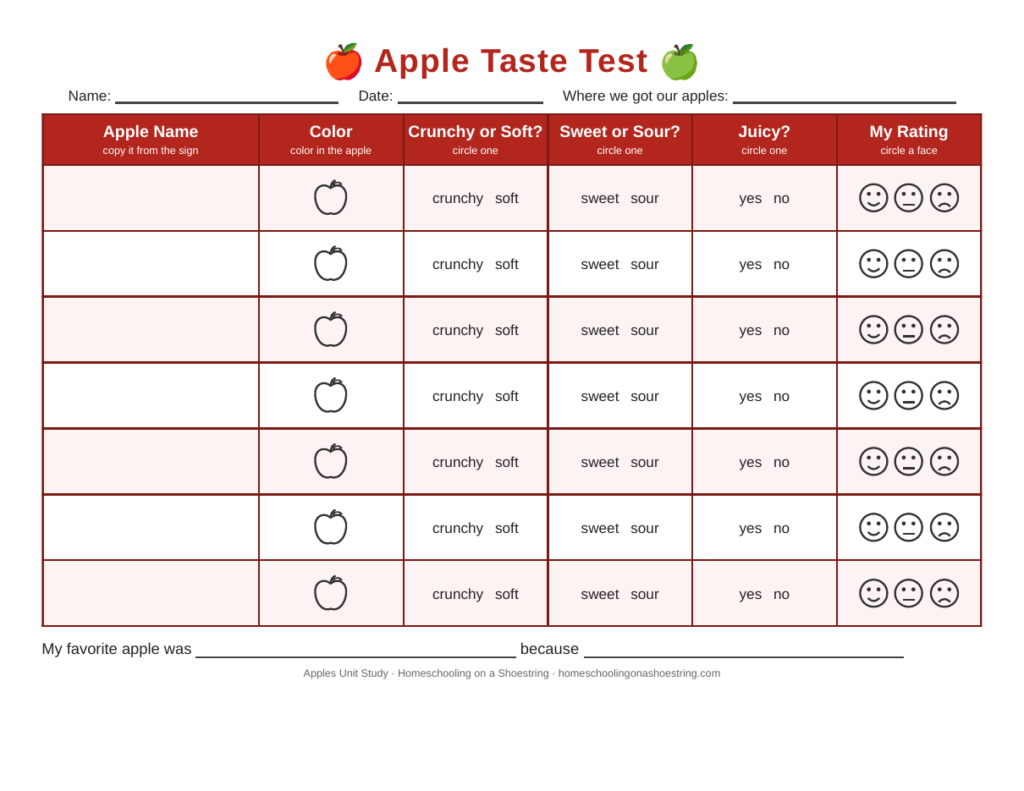 Free Apple Taste Test Chart (printable PDF
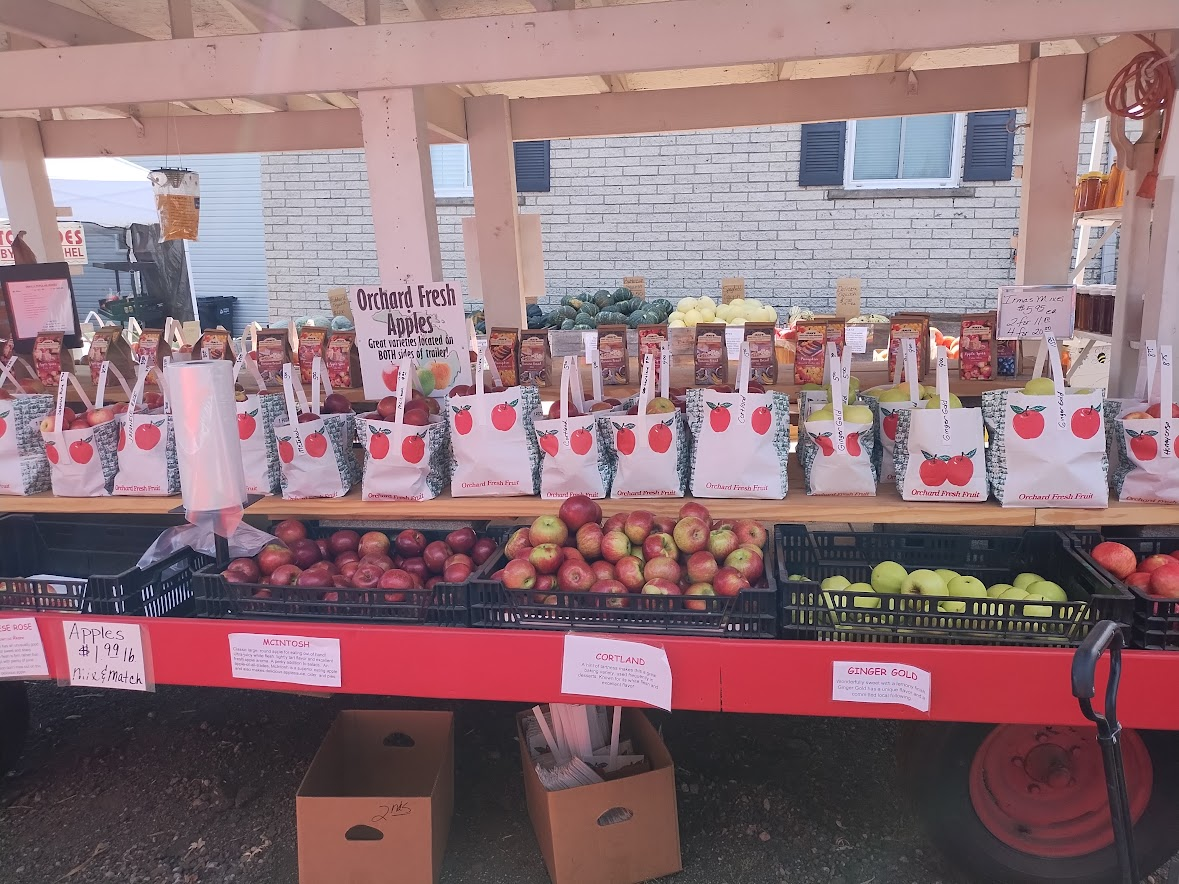
Japanese Rose, McIntosh, Cortland, Ginger Gold and Honeycrisp apples at Irma’s | Jodi Robertson
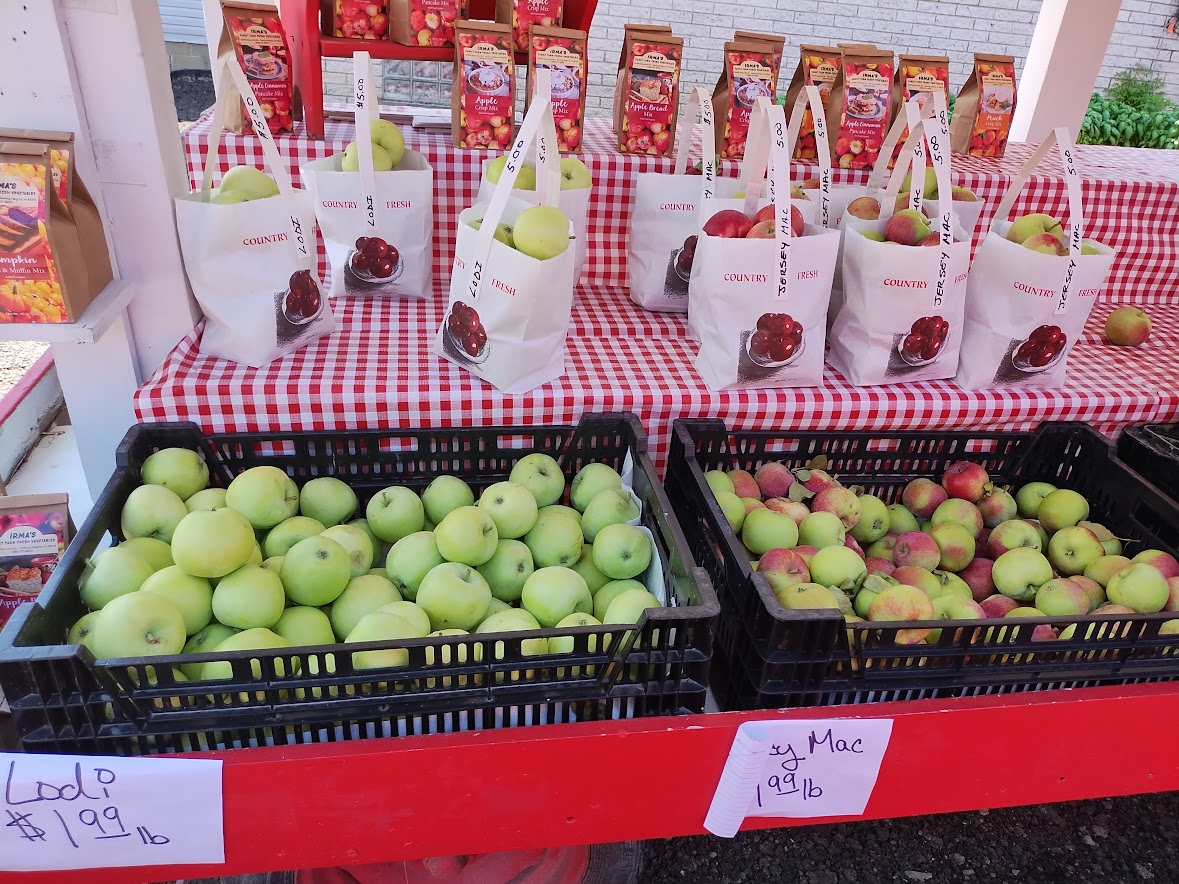
Lodi and Jersey Mac apples at Irma’s | Jodi Robertson
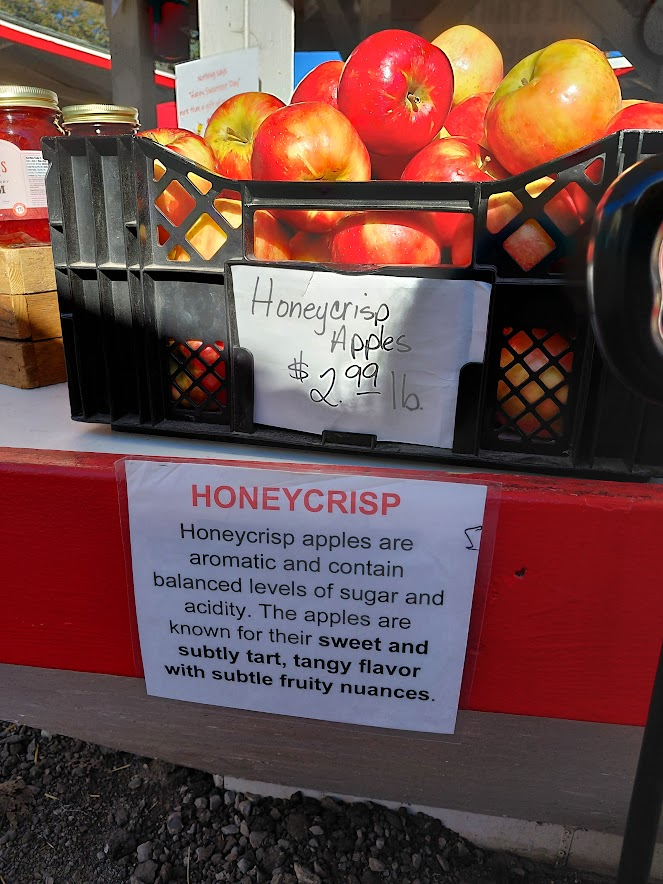
Honeycrisp apples at Irma’s | Jodi Robertson
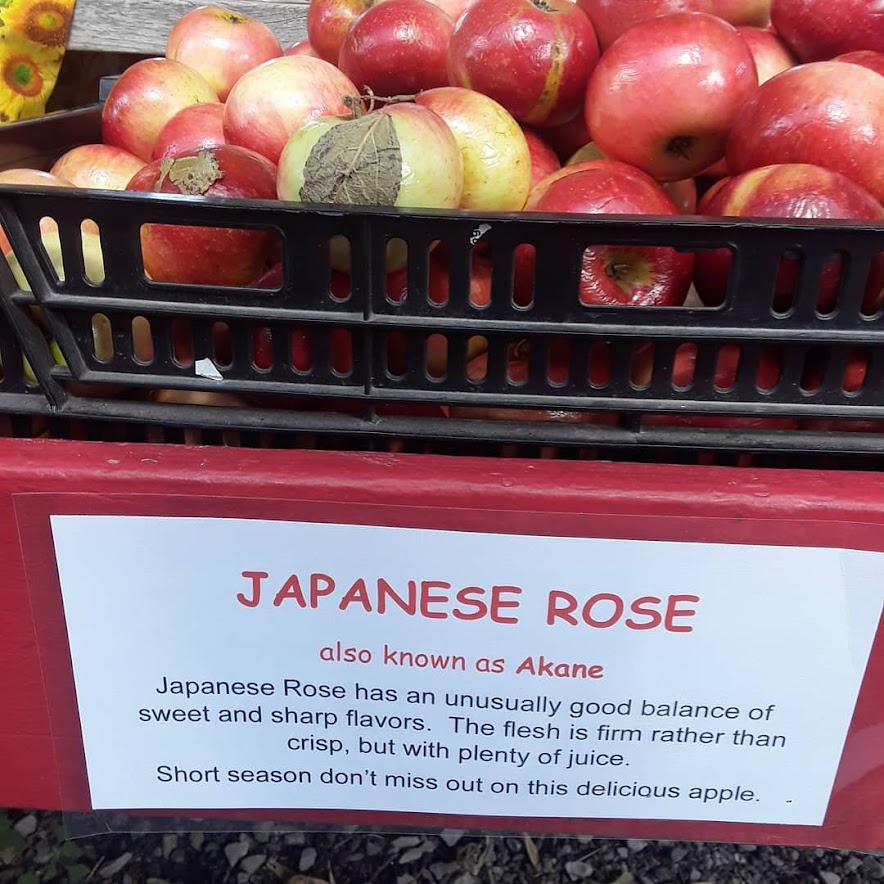
Japanese Rose (Akane) apples at Irma’s | Jodi Robertson
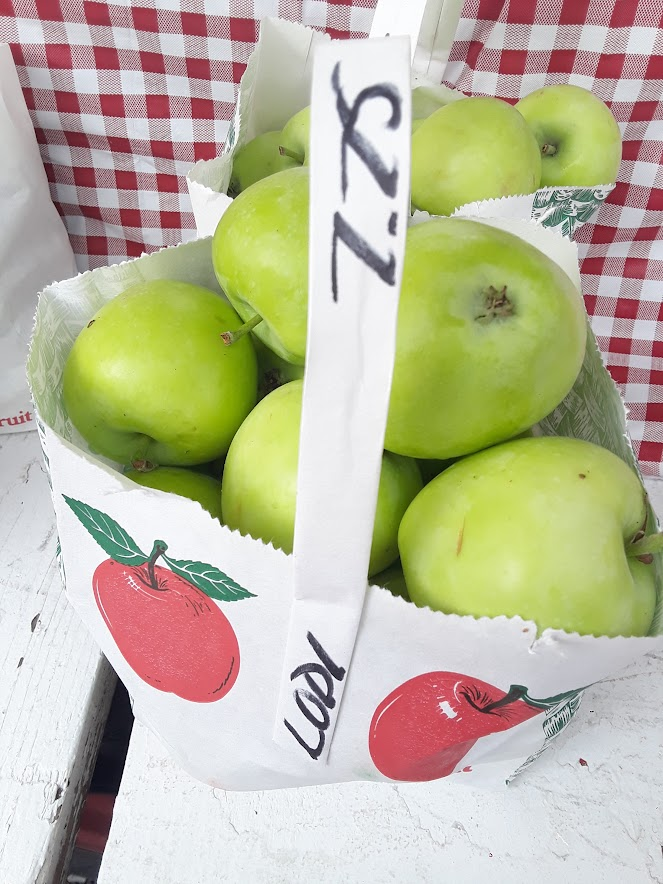
Lodi apples at Irma’s | Jodi Robertson
Writing Prompts
- Make a book about John Chapman.
- Do a mini-study of a year on an apple farm. It’s a year-round job.
- Write a story from the point of view of an apple, from blossom to pie.
- Chain story: The first person writes a title about apples. Each person adds and draws the next sentence on a new sheet. Tape the pages side by side and hang them up.
Recipes
Homemade Applesauce
- 6 apples, peeled, cored, and cut in chunks
- 1/2 cup water
- 1 teaspoon cinnamon
- Honey or sugar to taste (optional)
Put the apples and water in a pot, cover, and simmer over medium-low heat for about 20 minutes, stirring now and then, until the apples are soft. Mash with a potato masher or fork, stir in the cinnamon, and sweeten if you like. Serve warm or cold. Apples have fiber and vitamin C, and cinnamon adds flavor without needing much sugar.
More Recipe Ideas
- Dried apple rings: Core apples, slice them into thin rings, soak a few minutes in water with a little lemon juice, and dry them on a rack in a 200 degree oven for 2 to 3 hours, or string them and hang them to dry the pioneer way.
- Apple crisp: Slice apples into a baking dish, top with a crumble of oats, flour, butter, and brown sugar, and bake until bubbly.
- Apple pie: Bake one together and practice measuring, peeling, and slicing.
- Apple slices with peanut butter or cheese for a quick snack.
- Fresh cider or juice: Visit a cider mill, or use a juicer at home. See Juicing Apples vs Blending Apples to compare the two.
Field Trips
- Apple orchard: Pick your own apples and ask the grower how trees are pruned and grafted.
- Cider mill: Watch apples being pressed into cider.
- Farmers market: Count how many kinds of apples you can find.
- Grocery store: Compare the apple varieties and where each one was grown.
- Johnny Appleseed Festival in Fort Wayne, Indiana, held in September.
Art and Craft Ideas
- Apple prints: Cut an apple in half, dip it in paint, and stamp it on paper. Cut some top to bottom and some across the middle to see the star. When dry, add arms and legs with markers to make apple people.
- Stained glass apples: Cut the middle out of a paper apple shape to make a frame. Glue squares of red, yellow, and green tissue paper onto wax paper, glue the frame on top, trim, and hang it in a window.
- Apples up on top of me: Trace your child on butcher paper, color it in, and glue paper apples on top of the head. Count the apples and write the number.
- Paper plate apple: Color, paint, or cover a paper plate with torn bits of red paper, then add a brown stem and a green leaf.
- Thumbprint apple tree: Draw a tree and stamp red thumbprint apples on it.
- Handprint seasons tree: Make a paper tree on the wall and change it through the year with green handprint leaves, red palm apples, fall colors, and then bare branches.
- Dried apple faces: Peel an apple and carve a simple face with a plastic knife. Soak it 20 minutes in water with 2 tablespoons lemon juice, then hang it to dry for several days. Add a pipe cleaner body and fabric scraps for clothes.
- Apple windsock: Decorate a sheet of paper with apple shapes, roll it into a tube, and add red, yellow, and green streamers.
- Letter A apple: Cut out a big paper apple and glue on magazine pictures of things that start with A.
- Mini orchard: Fill a pan with dirt and make trees from twigs and green sponges with red tissue paper apples.
Information and General Resources
- U.S. Apple Association
- Michigan Apple Committee: Apple varieties and orchard information.
- Wikipedia: Johnny Appleseed
- Wikipedia: Apple
Lapbook Ideas
- Parts of an Apple: A flap book with the inside of an apple under the flap.
- Apple Tree Seasons Wheel: Winter, spring, summer, and fall.
- Johnny Appleseed Mini Book: His life story in pictures.
- Taste Test Graph: Your family’s favorite apples.
- Apple Varieties Pocket: A card for each kind you tasted, with the name and color on the front and what it’s best for (eating, pie, applesauce, or cider) on the back.
- From Blossom to Apple: A step-by-step accordion fold.
- Apple Sayings Flip Book
- Vocabulary Pocket: Flash cards for the vocabulary words.
Games
Use these ideas to turn key concepts from this unit into creative, engaging games your learners will love.
Game Board Blanks
Create your own themed games for this unit using printable templates and inspiration from the sites below:
- Games . . . Tools for Learning by Mark and Janice Vreeland
- Games for Learning ideas from Mary Peterson
- Board Game Templates – Tim’s Printables – free blank game boards
- JustFamilyFun – Board Game Paths
- Cardboard Cognition: Educational Board Games: An archived San Diego State University chart that helps you pick the right type of board or card game to make, with ideas for game boards and pieces.
More Game Ideas
- Hot apple pie: Pass an apple around the circle like hot potato while music plays.
- Bobbing for apples: Fill a tub with water and apples and try to catch one with your teeth.
- Apple tree file folder game: Draw an apple tree and use apple cutouts to teach letters, numbers, colors, or sight words.
- Apples to Apples (the board game)
- Printable Board Games: Blank boards and parts for making your own games.
Neverending Card Deck
Use the Neverending Card Deck card and box templates to make your own sets. You can flip the card template to print your custom design on the back. Free clipart works great for themed backs or matching your card box. These cards can be used in both card games and board games.
Apples Card Game: Apple Variety Rummy
Make a deck of 40 cards from index cards or cut-up cereal boxes. Choose 10 kinds of apples and make 4 cards for each one: the name, a picture, its color, and what it is best for.
- Red Delicious: Dark red. Eating fresh.
- Golden Delicious: Yellow. Eating, baking, and salads.
- Granny Smith: Green. Tart, great for pies.
- McIntosh: Red and green. Applesauce.
- Gala: Red and yellow stripes. Eating fresh.
- Fuji: Pink and yellow. Very sweet, eating fresh.
- Honeycrisp: Red and yellow. Extra crunchy.
- Jonathan: Bright red. Cider and pies.
- Rome: Deep red. Baked apples.
- Crabapple: Small and red. Jelly.
How to play:
- Deal 7 cards to each player. Put the rest face down in a pile and turn the top card face up to start a discard pile.
- On your turn, draw one card from either pile, then discard one card.
- When you collect all 4 cards for one apple, lay them down and say one thing about it.
- The first player to lay down two complete apples wins.
For little ones, play Apple Go Fish with the same cards. These cards also work with your homemade file folder and board games. Players draw a card and name the apple’s color before they move.
GeoSafari Cards
Using the GeoSafari Instruction Guide, you can create a wide variety of custom cards for this unit. GeoSafari is especially great for independent learning and long car trips!
Donna Young shows you how to make GeoSafari Cards
DIY Card Ideas
- Timeline event ↔ date matching cards
- True or false review questions
- Vocabulary words ↔ real-life images
- Chapter-based quizzes or review sets
More GeoSafari Card Ideas
- Match apple varieties to their colors.
- Put the steps from blossom to apple in order.
- Label the parts of an apple tree.
Worksheets
Make your own worksheets with these worksheet creation tools:
- SchoolHouseTech https://www.schoolhousetech.com/ This company gives away two free software worksheet factories one for Basic math and one for wordsearch utility that will make wonderful complements to this unit when you include the clipart listed in the clipart section.
- Start Write – This program makes nice reports and handwriting worksheets for the unit. https://www.startwrite.com/
- TeachNology has several online worksheet makers and a ton of Rubric makers. Rubrics work great with Homeschool Tracker because they give you total points and you count up exactly how many points your child gets. https://www.teach-nology.com/worksheets/
- Online Crossword Puzzle Maker to use with your vocabulary words or locations or even dates from the timeline. https://www.happychild.org.uk/wks/english/ssm/crosswords01.htm
- Enchanted Learning: Apples: Printables, shape books, and coloring pages.
Evaluation Ideas
Assemble a three ring binder and please include:
- A copy of this unit
- Course Description (Highschool Students)
- Write a summary about books read for the unit
- Write an essay on the various topics discussed
- Your Lapbook created for the unit (K-8 Students)
- Any worksheets or activity books created with SchoolhouseTech Software https://www.schoolhousetech.com/
- Your journal and its contents
- Your Log of activities from Homeschool Tracker https://www.homeschooltracker.com/free-homeschool-tracker-basic-edition Its Free!
- Your Timeline
- Have the student tell the life story of an apple tree using their seasons drawings.
- Have older students write a report on Johnny Appleseed, separating the facts from the legends.
Related Unit Studies from Homeschooling on a Shoestring
More Unit Studies
Looking for your next topic? The Unit Studies directory has free and low-cost activities, lesson plans, worksheets, study guides, books, recipes, lapbook ideas, and games for homeschooling on a shoestring: https://homeschoolingonashoestring.com/homeschooling/homeschooling-by-subject/unit-studies/
Last Updated on November 2, 2026 by Jodi