6 Vinegars I Keep in My Kitchen
Vinegar isn’t exciting to look at. It sits in the cabinet next to the cooking spray and nobody gives it a second thought. But it’s one of the things that has changed the way I eat the most, and it costs next to nothing.
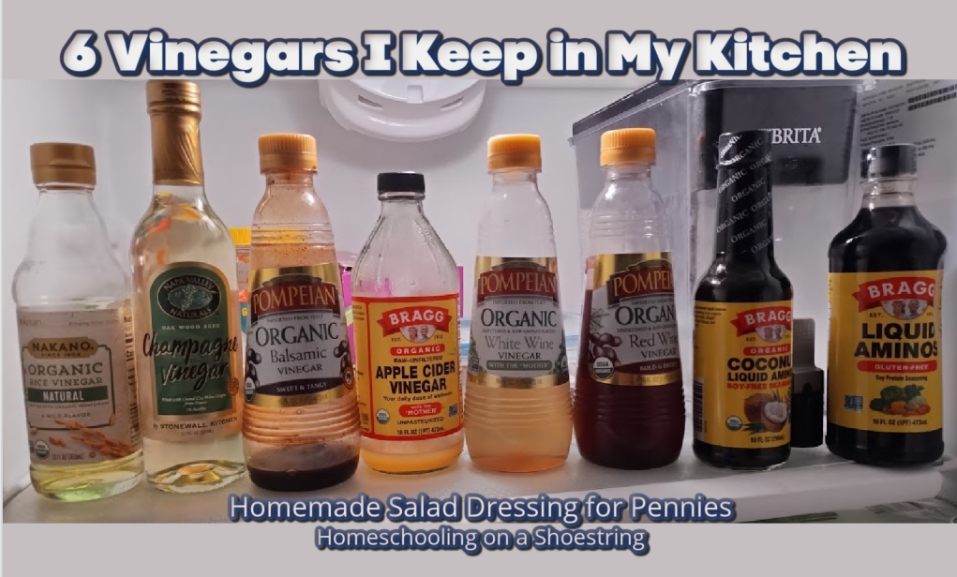
I keep six kinds on hand right now. That probably sounds like a lot, so here’s why.
How Vinegar Changed My Salads
I’ve always liked salad. When I stopped buying bottled dressing and started mixing my own with vinegar and dijon mustard, my salads got even better. A little acid makes vegetables taste brighter and more like themselves, instead of burying them under something heavy.
I still have restaurant ranch once in a while, and I regret it every time. Vinegar dressings sit fine with me. Ranch doesn’t anymore.
The Cost Difference
Here’s roughly how it works out per serving:
- Higher-end dressing like Primal Kitchen or Chosen Foods: $6 to $8 for an 8-ounce bottle, about 8 servings, so 75 cents to $1 a serving
- Cheap dressing like Kraft or Wish-Bone: $3 to $4 for a 16-ounce bottle, about 16 servings, so 20 to 25 cents a serving
- Organic vinegar: $4 to $6 for a 16-ounce bottle, which is 32 tablespoons. At 1 to 2 tablespoons a salad, that’s 16 to 32 servings, so about 12 to 38 cents a serving
Add a teaspoon or two of dijon and homemade comes out somewhere around 15 to 40 cents a serving, depending on how much vinegar I pour. That’s about the same as the cheap bottled stuff and a lot less than the good brands, and I know exactly what’s in it. A bottle of vinegar also lasts for months, so it’s not one more thing going bad in the fridge.
The Six Vinegars I Use
Balsamic
Sweet, dark, and rich. This is the one I use most. Balsamic with dijon and some dried herbs is my everyday dressing, and it’s great on roasted vegetables too. A little goes a long way.
Apple Cider Vinegar
Tart and bold, with a little apple in the background. I reach for it when I want a dressing with some punch. If you buy the unfiltered kind with “the mother,” you’ll see cloudy strands in the bottle. That’s normal. Some people drink ACV in water before meals. If you do, always dilute it, because it’s hard on tooth enamel.
Rice Vinegar
The mildest of the bunch, a little sweet and very gentle. I use it with coconut aminos when I want something Asian-inspired, or any time I don’t want the vinegar to take over.
White Wine Vinegar
Clean and crisp. It adds tang without any sweetness or color, so it stays in the background and lets everything else come through.
Red Wine Vinegar
Bolder and more savory than white wine vinegar. It holds up to hearty greens and goes really well with dijon and a little garlic powder.
Champagne Vinegar
Light and a little floral. This is the one for delicate salads where I barely want to taste the dressing at all.
What About the Health Claims?
You’ll see a lot of big promises about vinegar online. There is some research suggesting that vinegar with a meal may help soften blood sugar spikes, which is interesting. But vinegar isn’t a detox and it isn’t a cure for anything. For me the real benefit is simpler: it makes healthy food taste good enough that I actually eat it, without piling on oil, sugar, or dairy.
Two Things That Aren’t Vinegar but Belong Next to It
Dijon Mustard
Dijon is what holds my dressings together. It helps the vinegar and everything else blend instead of separating, and it adds a creamy tang. Yellow mustard just doesn’t do the same job, at least not for my taste buds.
Liquid Aminos and Coconut Aminos
Both taste like a milder, slightly sweeter soy sauce. Liquid aminos are made from soybeans. Coconut aminos are made from coconut sap, so they’re soy-free and much lower in sodium than soy sauce. (And no, they don’t taste like coconut.) A splash with rice vinegar gives you a savory dressing without reaching for the salt shaker.
How I Make My Dressings
I don’t measure much. I mix it fresh right before I eat because it only takes about a minute. My basic formula:
- 1 to 2 tablespoons of vinegar
- 1 to 2 teaspoons of dijon
- A shake of seasoning (My daughter got me the no-salt blend from Costco and it is great! Dried parsley is good too)
- A splash of water if it’s too thick
Whisk, taste, adjust. I don’t add sweeteners. The vinegar has plenty of flavor on its own.
A few combinations I keep coming back to:
- Balsamic, dijon, and dried herbs
- Apple cider vinegar, dijon, and no-salt seasoning
- Rice vinegar and coconut aminos
- Red wine vinegar, dijon, and garlic powder
Where to Start
You don’t need six bottles. Pick up one bottle of balsamic and a jar of dijon, and make your next salad dressing yourself. If you like it, branch out from there.
What’s your go-to vinegar? I’d love to hear what you’re mixing up.

You May Also Like

Roller Skating Safety Tips Rolling with Confidence and Protection

What Would You Give Up to Feel Better?