Build Your Cold and Flu Sick Bucket Before You Need It
I’ve kept lists of our cold and flu medicines in my Erin Condren Life Planner for years. A list is great, but I also like having the things we actually reach for gathered together in one place before anyone gets sick.
We’ve always called it the Sick Bucket.
And yes, I know. 😂 A “sick bucket” can also mean the bucket you throw up in. If you use an actual plastic tub, I suppose that’s a bonus feature. Dump everything out and you have a bucket. Thankfully, we’ve never needed ours for that!
Start With Whatever Container You Already Have
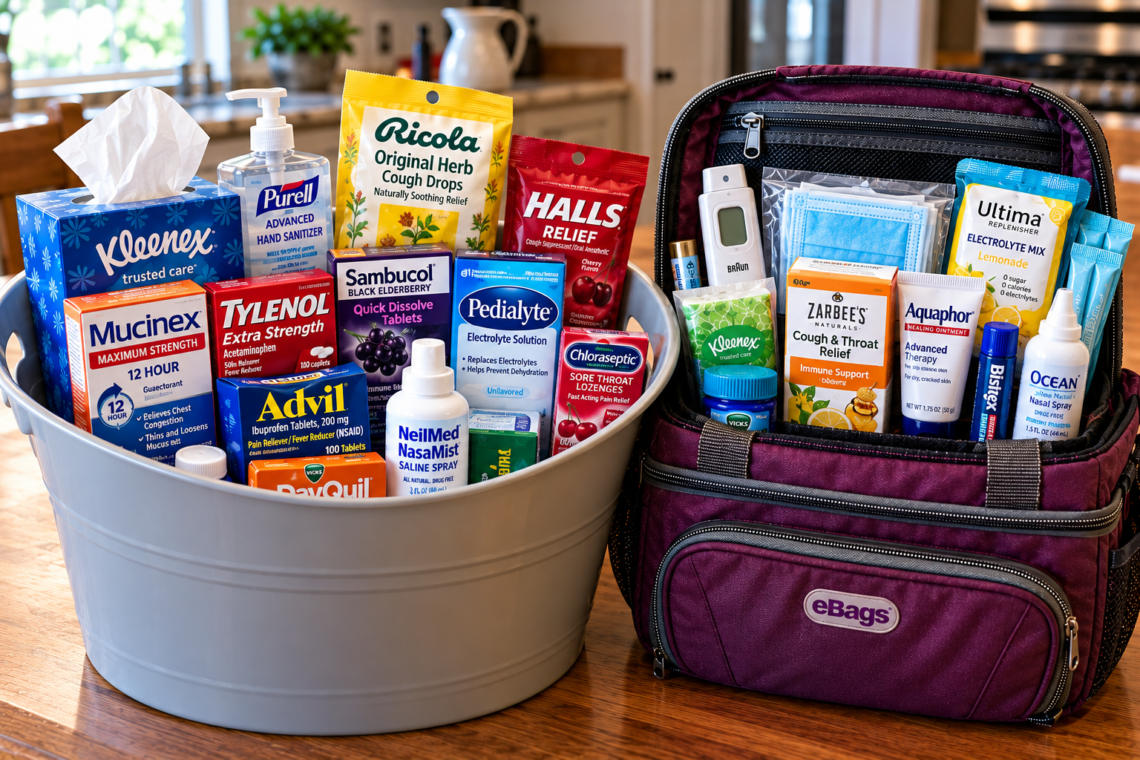
My original Sick Bucket was one of the cheapest handled plastic tubs I could find at Dollar Tree. It didn’t need to be pretty or expensive. It just needed to hold everything and be easy to grab.
Now I use an old eBags Crew Cooler II that I wasn’t using as a lunch bag anymore. It has handles, zips closed, and has pockets and compartments, which makes it even easier to keep everything organized.
A plastic tub, basket, tote, or unused lunch bag all work. The container isn’t the important part. Having it ready is.
What Goes in the Sick Bucket?
- Thermometer (check the batteries, too)
- Tissues
- Saline nasal spray or rinse
- Cough drops
- Electrolyte packets
- Face masks
- Hand sanitizer
- Lip balm
- Small washcloth or towel
- The OTC cold and flu medicines your household actually uses
- Dosing cups or oral syringes, if you have little ones
- Wipes and small trash bags
- Hand cream or other little comfort items you like having nearby
What stays in the kitchen
Tea, honey, broth, soup, and crackers are things I want in the house when someone’s sick, but they don’t need to live inside the Sick Bucket.
Honey stays in the kitchen. And remember, honey is only for adults and children over age 1. Never give honey to babies under 12 months.
One Important Thing About the Medicine
Keep medications in their original packaging. That way the directions, dosing information, and expiration date stay with the medicine.
Before combining cold and flu products, check the Active Ingredients section on every package. Products that look completely different can contain the same medicine.
Acetaminophen is an especially important one to watch. It’s sold on its own, and it’s also included in many multi-symptom cold and flu products, so it’s easy to accidentally take it twice without realizing it.
Follow the label directions, and check with a pharmacist or healthcare professional when you’re unsure what’s appropriate for you or your family.
Give Your Sick Bucket a Checkup
Before cold and flu season starts, pull everything out.
- Check the expiration dates.
- Make sure the thermometer works.
- Replace anything you’re running low on.
- Get rid of things you don’t use anymore.
Expired medicine doesn’t get to live in the Sick Bucket forever just because it’s already there.
Disposing of old medicine
Many pharmacies and community programs offer medication take-back or disposal options. Some CVS locations have medication disposal boxes but Walgreens does not, for example. Check with the individual location first, because what they accept can vary. Side note: If you have expired vitamins or supplements, they might be able to accept those as well.
The FDA also has information on safe disposal here: https://www.fda.gov/drugs/safe-disposal-medicines/disposal-unused-medicines-what-you-should-know
Then pack everything back up and put your Sick Bucket somewhere easy to find.
Why It’s Worth Doing Now
The worst time to discover you’re out of tissues, your thermometer battery is dead, or your cold medicine expired two years ago is when you already feel like crap.
A few minutes of preparation now means one less thing Sick You has to deal with later. ❤️

You May Also Like
Project Organize Refrigerator

Donating Dog Food to Animal Shelter With Little Money